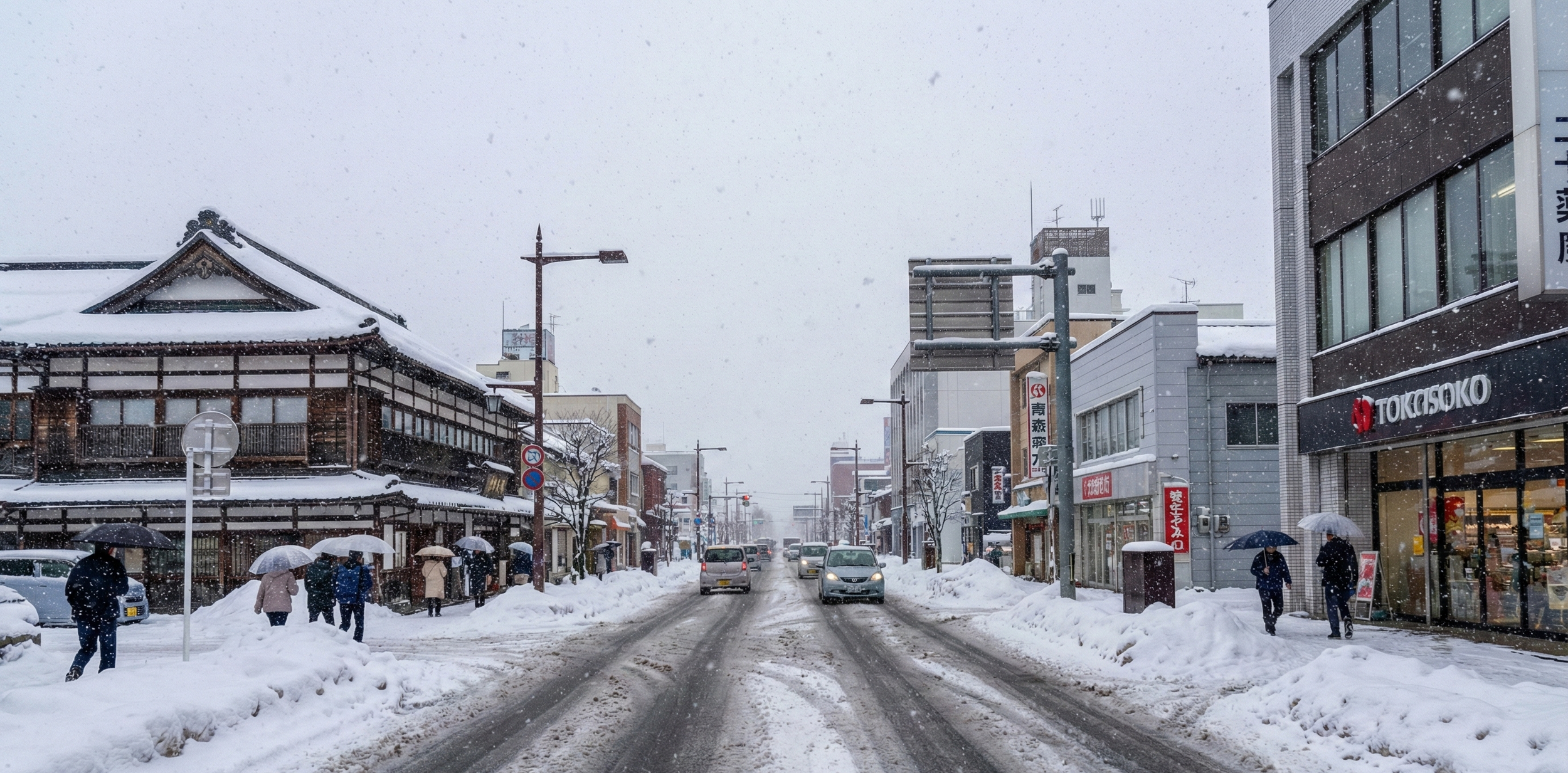
In the article "The Last Bank Standing: Aomori's Financial Fight for Survival" (Feb 2, 2026), Zakari Watto provides a gritty, boots-on-the-ground look at the reality of Aomori Michinoku Bank one month after its formal integration.
The body of the article is structured around several key observations and "real-world" consequences of this massive regional experiment:
The "Oligopoly of Necessity"
Watto begins by discussing the unprecedented legal shift that allowed this merger. Under a special exemption from the Anti-Monopoly Law, Aomori Michinoku Bank now controls roughly 80% of the market share in the prefecture. Watto argues that this isn't a power grab, but a "controlled retreat," where the government has essentially decided that a monopoly is better than a total collapse of the regional financial system.
The Human Cost of Consolidation
The article features interviews with local residents and business owners. Watto highlights:
- The Elderly Abandoned: With the closure of redundant branches that once sat across the street from each other, elderly residents in towns like Mutsu or Towada are losing their only physical touchpoints for banking.
- Corporate Culture Clash: Watto notes the internal friction between the "Aomori Bank" veterans (seen as more elite/academic) and the "Michinoku Bank" veterans (known for their customer-centric, "charming" approach), suggesting that the internal cultural merger is far from complete.
From "Lender" to "Consultancy"
The body dives into the bank's new business model. Watto details how the bank is moving away from traditional interest-based income to fee-based services:
- Succession Services: The bank is now acting as a matchmaking agency for small businesses (like apple orchards and seafood processors) that have no heirs.
- Tourism & Exports: Watto describes the bank's "Overseas Challenge Program," where they actively help local SMEs export Aomori products (scallops and garlic) to Southeast Asia and North America.
The Shadow of the "77 Bank"
A significant portion of the body discusses the "encroachment" from outside players. Watto points out that while Aomori Michinoku Bank focuses on consolidation, The 77 Bank (based in Sendai) is aggressively moving into the prefecture to cherry-pick the most profitable corporate clients who are wary of the new monopoly's tighter loan conditions.
Conclusion
Watto ends with a poignant scene from a bank branch in Aomori City, where a "Digital Concierge" is trying to teach an 80-year-old woman how to use a QR code for a transaction. He uses this as a metaphor for the entire prefecture: a community being forced into a high-tech future by the sheer necessity of survival.