Here is the full body text for your blog post, written in the characteristic Zakari Watto style: analytical yet deeply atmospheric, bridging the gap between Aomori's harsh winters and its explosive summer culture.
Fire and Ice: Why Aomori's Frozen Winters Ignite Japan's Hottest Festival
By Zakari Watto
February 1, 2026
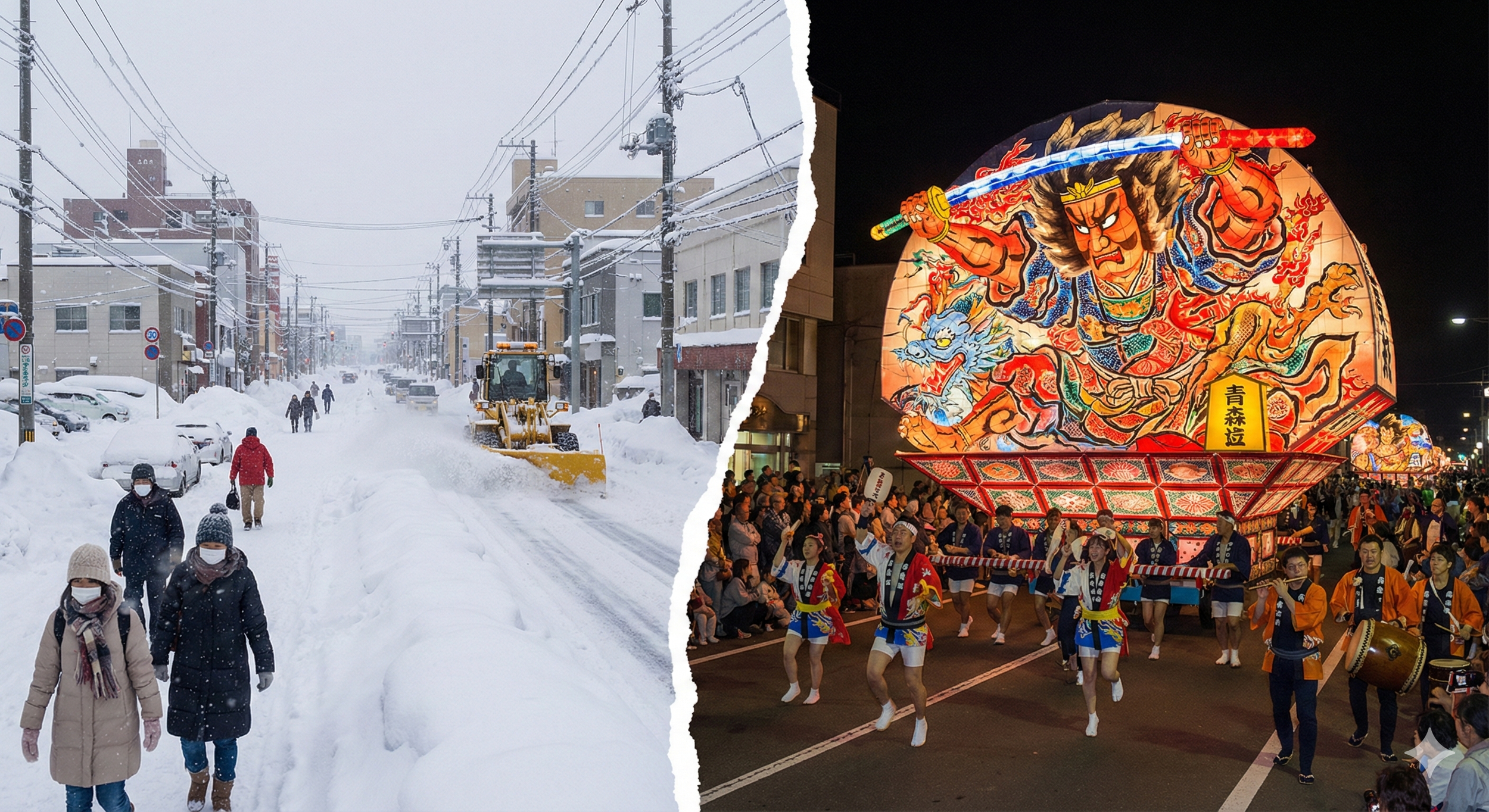
To understand the Nebuta Matsuri, you have to stand in the middle of Aomori City in the dead of February. Feel the sharp bite of the icy wind as it cuts through layers of clothing, leaving a chill that clings to your bones. Inhale deeply and smell the crisp, pure scent of the snowfall as it layers upon the city, almost muffling the faint crunch beneath your feet. Nearly 600 inches of annual snowfall, a world record, turns this northern capital into a silent, monochrome fortress. The only sounds are the whisper of snowflakes descending and the distant, muted echoes of snow shovels doing battle with nature. In Tokyo, the seasons are a gentle transition; in Aomori, winter is a siege.
But it is precisely this "frozen endurance" that makes Aomori the site of Japan’s most electric summer. There is a psychological law at work here: the Fire and Ice Paradox. The heat of the festival is fueled by the isolation of the ice.
The Winter Incubation
While tourists see the glowing lanterns in August, the festival is actually born in the dark. Throughout January, the Nebutashi, also known as the Nebuta Masters, are already at work in unheated sheds known as Rasseland. In these quiet workshops, amidst the sub-zero temperatures, they hand-wire the massive skeletons of future warriors and demons. Kazuo Tanaka, a renowned Nebutashi, once shared, 'In the silence of winter, each twist of wire is a whisper of summer. The chill inspires a burning creativity within me.' This anecdote highlights the intimate relationship between the harsh climate and the art, breathing life into the paper giants long before they illuminate Aomori's summer nights.
This period of isolation is a creative pressure cooker. For the locals, winter is a time of hoarding energy, of "bottling up" the passion that has nowhere to go while the streets are buried in white. The construction of a 20-foot paper giant is more than a craft; it is an act of defiance against the weight of the snow.
The August Detonation
When August 2nd finally arrives, the "bottled-up passion" of the north finally explodes. The transformation is jarring. The quiet, polite residents of Aomori shed their winter layers and don the colorful Haneto costumes.
The energy of the Haneto dancers, their rhythmic jumping and the piercing 'Rassera!' chant, is not just a performance. It is a ritualistic shaking off of the winter’s lethargy. If you watch closely, the intensity of the dancing is almost frantic. It is the sound of three hundred thousand people finally exhaling after a six-month breath-hold. As an attendee, you can't help but be swept up in the fervor. Surrounded by the vibrant colors and the pounding drums, there's a moment when you feel the ground vibrate beneath you, echoing the heartbeat of Aomori itself. The excitement in the air is palpable, a living force that pulls you into the rhythm and leaves you breathless, yet invigorated.
The Economic Lifeblood
Beyond the psychology, there is a cold, hard strategy to the fire. In a prefecture fighting against depopulation and economic contraction, the Nebuta Matsuri is the ultimate economic battery.
- The 20-Billion-Yen Pulse: Over six days, the festival pumps a massive influx of capital into the region, sustaining the hotels, seafood markets, and small businesses that struggle through the dormant off-season.
- Cultural Infrastructure: The festival is the "social glue" that keeps the youth from migrating to Tokyo. It gives the community a shared identity that is stronger than the climate. Yuki Sato, a local high school teacher and community leader, notes, "The Nebuta Matsuri is more than just a festival; it's a beacon of hope and pride for us. Many of my students feel a renewed sense of belonging during this time, which makes them think twice about leaving Aomori." Personal stories like these highlight how deeply the celebration impacts the lives of residents, knitting them closer to their roots.
Conclusion: The Soul of the North
Aomori is a region defined by its extremes. Without the brutal winter to push against, the Nebuta would likely be just another pretty parade. It is the Ice that gives the Fire its meaning. In the north, survival isn't just about staying warm; it’s about ensuring that when the snow finally melts, you have something bright enough to light up the entire country.